5 Reasons Why Surveys Aren’t Up to the Consumer Data Challenge
Surveys Have Always Been a Traditional Tool
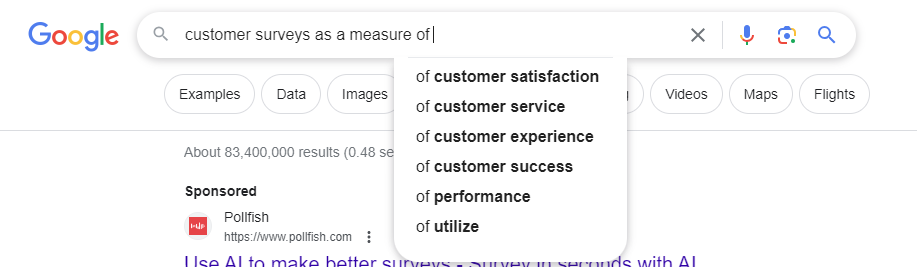
Surveys have always been a traditional tool that’s used for gathering data on customers. What are you trying to measure when you send out a customer survey? Customer satisfaction? Service? Experience? Those were certainly some of my top options when I searched Google. What quickly comes to mind are the Customer Satisfaction (CSAT) score or Net Promoter Score (NPS). Brands also conduct surveys to measure customer intent. They want to learn whether a consumer will purchase X or Y products which are under development.
Surveys can be labor intensive
Cost is a big factor when it comes to surveys, especially if you’re using an outside firm to conduct it. To start, there’s the search for the right firm to create the survey. Even if you don’t engage a firm, you have to construct the survey and ensure there are no leading questions that create data biases. Plus you have to consider the types of questions, meaning you have to ensure there’s a balance between quantitative and qualitative questions. An audience needs to be identified and sent the survey. Let’s face it, not everyone will complete the survey either. You’re lucky if you get a 20% or 30% response rate. Upon collecting the data, the analytics team processes it all to distill consumer insights. It’s a very long and involved process. It can literally take months.
Guess what though. There is already a better data source for answering all these burning questions, online consumer reviews. You may be surprised to learn that many of the answers that brands need can actually be found online through consumer reviews. Think about it! These are consumers who have already purchased your product. It goes beyond intent, it’s a done deal. They are ranting and/or raving about your brand and products. They are sharing opinions on a range of topics. Some of the topics you probably wouldn’t have considered. At Revuze, we see interesting topics emerge thanks to our Generative AI engine. For instance, would you have thought of hot sauce as a gift? It is a trend that we identified based on the review data.
The Benefits of Online Consumer Review Data
Consumer reviews from verified buyers is a treasure trove of information that already exists. That means there’s no need to create a survey, identify an audience, send it out, and process the data. It’s also a bigger audience than what you would have identified to begin with. Perhaps your survey was going to be sent to hundreds or thousands of potential consumers. The online review audience can be in the millions! The large data set ensures more statistical accuracy to help brands make better data-driven decisions.
- Real-Time Feedback:
Everyone is on a deadline and the sooner you have consumer data, the sooner you can make the informed decisions for your business. Online consumer reviews provide real-time feedback from customers who have already purchased and experienced the product. This feedback is given shortly after the purchases and doesn’t require long waiting periods for responses like with surveys, allowing brands to quickly understand consumer sentiments and respond accordingly. - Unbiased Opinions:
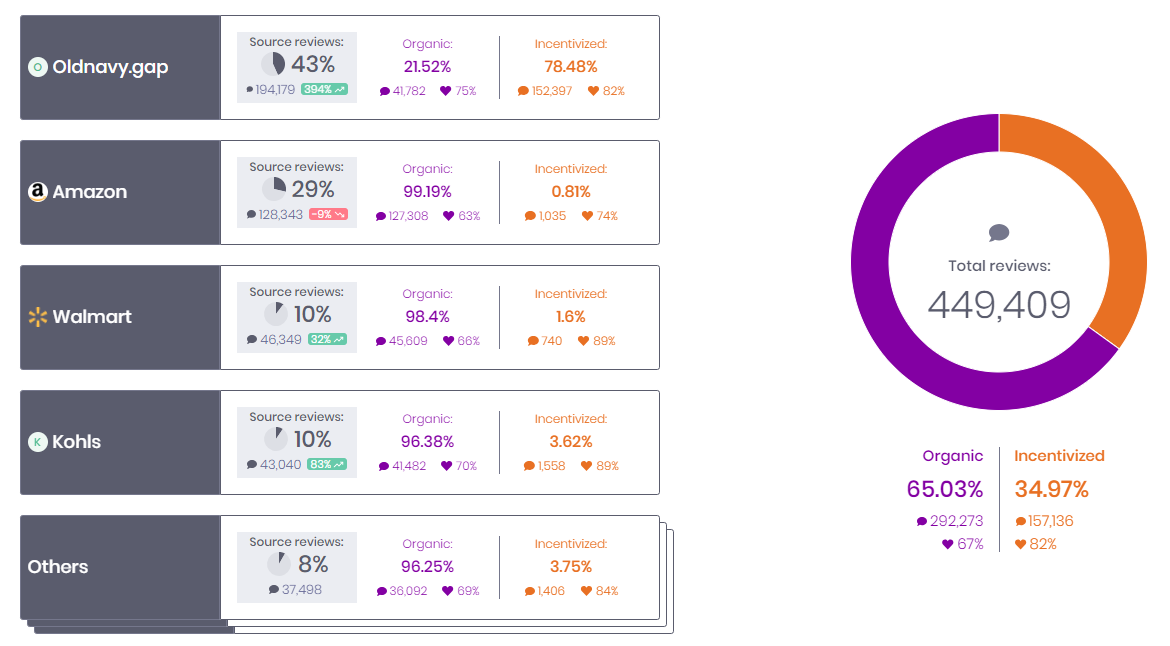
Surveys can be susceptible to leading questions and biases, which may influence the responses. In contrast, verified online consumer reviews offer unbiased opinions directly from customers, expressing their genuine thoughts and experiences without external influence. If they are not incentivized, their opinions were unsolicited by the brand and demonstrate the genuine desire to share what they think about the product. Incentivized reviews are still authentic, but tend to lean more positive. - Comprehensive Coverage:
Surveys often struggle to capture a wide range of topics that consumers might have strong opinions about. Thanks to generative AI, Revuze’s consumer insights from online reviews, on the other hand, cover diverse product aspects that arose from the data set. The topics around products are not predetermined or pre-defined but are automatically determined by the generative AI based on consumer feedback. - Larger Sample Size:
Surveys typically target a specific audience, limiting the number of responses. In contrast, online consumer reviews can reach millions of customers, providing a much larger sample size that ensures greater statistical accuracy for data-driven decision-making.

- Reduced Time and Effort: Constructing and conducting surveys, as well as processing the collected data, can be time-consuming and resource-intensive. By leveraging existing online consumer reviews, brands eliminate the need to create and distribute surveys, saving valuable time and effort in the data collection process.
From Surveys to Consumer Data Analytics
The shift away from surveys is part of a larger transformation: the rise of consumer data analytics as the backbone of customer insight strategies. By integrating multiple sources of feedback, reviews, social media, support tickets, and even purchase data, companies can create a 360° view of the customer experience. Unlike surveys, which are static and episodic, consumer data analytics is continuous, providing real-time intelligence to decision-makers across marketing, product, and customer experience teams.
With advanced Voice of Customer analytics, organizations can connect structured data (like NPS scores) with unstructured text (like customer comments) to discover root causes of satisfaction and dissatisfaction. This deeper view helps companies act on what matters most, whether that’s improving delivery timelines, clarifying product descriptions, or addressing quality issues before they escalate.
Online Consumer Review Analysis as a Strategic Advantage
One of the richest streams within consumer data analytics is online consumer review analysis. Customers leave reviews in their own words, often highlighting topics brands may never think to ask about. A cosmetics company might discover praise for packaging sustainability, while an electronics brand might uncover frustrations with setup instructions. These organic insights are powerful because they are unsolicited, authentic, and often emotionally charged.
Platforms like Revuze transform millions of raw reviews into actionable themes, offering the scale and statistical accuracy that surveys lack. With customer feedback analysis tools, brands can benchmark their products against competitors, spot emerging issues early, and identify opportunities to delight customers. This form of analysis doesn’t just replace surveys, but rather it goes steps beyond by surfacing hidden patterns and trends that surveys would never capture.
Generative AI in Consumer Insights
The final accelerator in this evolution is generative AI in consumer insights. Traditional analytics methods require analysts to set predefined categories or manually tag data, which limits agility. Generative AI removes those limitations by automatically detecting and creating new themes based on the data itself. If a new consumer trend emerges, such as; treating hot sauce as a gift, the AI recognizes and elevates it instantly.
Generative AI also democratizes insights by producing natural-language summaries, visual dashboards, and next-step recommendations that any business unit can use. It enables marketing to fine-tune messaging, product teams to validate R&D investments, and executives to track performance against real-world sentiment. For companies seeking guidance, customer experience consulting combined with AI-driven insights ensures they can adapt strategies rapidly without guesswork.
Why This Matters for Brands
Surveys still have value, especially for testing intent or validating concepts, but they should no longer be the cornerstone of consumer research. Today, agility and breadth are critical. By blending consumer data analytics, online consumer review analysis, and generative AI in consumer insights, brands can shift from reactive, survey-driven feedback loops to proactive, predictive strategies that keep pace with changing consumer expectations.
For organizations ready to level up, there are customer satisfaction measurement tools and customer feedback platforms designed to turn data into action. The future of consumer understanding is no longer about asking more questions, it’s about listening smarter to the answers already out there.
Conclusion
Overall, online consumer reviews present a valuable and efficient alternative to traditional surveys, offering rich insights directly from real customers without the complexities associated with conducting surveys. Intent is out of the equation and the insights from consumer reviews allow you to adapt and be responsive to the current market trends. In addition, when you use a platform like Revuze, which is powered by generative AI, the topics generated for products are unlimited. Consumer insights allow brands to be agile amid the changing market. Learn more about how Revuze’s generative AI solution can help.
FAQs
-
What are the main limitations of traditional customer surveys?
Surveys capture limited samples, often suffer from recall bias, and take weeks to collect and analyze. By the time results are available, consumer preferences may have shifted, leaving brands with outdated, incomplete, or misleading insights. -
How can online reviews provide more accurate consumer insights than surveys?
Reviews are unsolicited, real-time feedback from verified buyers, highlighting what truly matters to consumers. They offer scale, freshness, and authenticity, reducing bias and revealing strengths and weaknesses in natural consumer language—providing richer, more accurate insights than traditional surveys. -
What role does generative AI play in analyzing consumer data?
Generative AI processes massive volumes of unstructured consumer data, such as reviews and surveys, to identify themes, summarize sentiment, and surface emerging trends. It turns overwhelming feedback into clear, actionable insights quickly, enabling brands to make faster, smarter decisions. -
Are surveys still useful alongside online consumer review analysis?
Yes. Surveys remain effective for testing hypotheses or validating ideas, while online reviews provide continuous, unsolicited feedback. Combined, they balance breadth with depth—capturing both large-scale consumer sentiment and targeted responses, creating a more complete and reliable understanding of consumer needs. -
How do larger datasets improve the reliability of consumer insights?
Bigger datasets dilute the impact of outliers, reduce bias, and reveal stronger patterns across categories, markets, and demographics. With more feedback points, insights become more statistically reliable, allowing brands to trust findings and make confident, data-driven decisions.