A unified market research platform that aggregates the total voice of the customer. Consolidate feedback across channels, from online reviews, social media, CSAT, surveys, and forums, into a single actionable view.
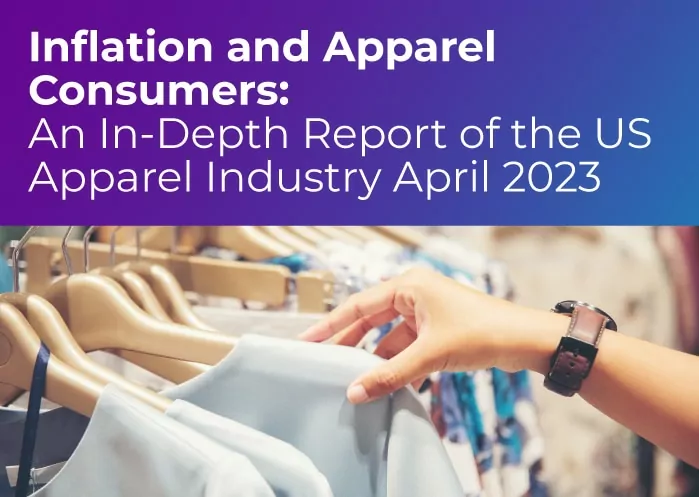
During the past year, inflation and prices soared while wages remained mostly flat, affecting how consumers shop. We were curious to understand how these changes affected consumers’ shopping behavior, so we took a deep dive into data from the apparel industry.
Interestingly, we found fascinating relations between inflation and what it means for consumers when they shop. Read on to discover how consumers reacted, what it means for your brand, and how to position yourself in this new market.
Background
As a result of the ongoing supply chain crisis kickstarted by the COVID-19 pandemic and the Russia-Ukraine war, the world economy has changed significantly.
A big focus of these changes has been on the soaring inflation rates, reaching double digits in the UK and a peaking at 9.1%in the US during June and began to steadily decline, ultimately reaching 6% at the start of 2023.
And so, with prices rising all across the board and wages stagnating, households’ budgets and disposable income have been effectively reduced, ushering in a cost of living crisis.
This, in turn, naturally affected consumers’ spending habits, as pricing and value for money become key factors when shopping for items – from groceries to electronics.
Following our in-depth cosmetics industry report, we decided to delve into the apparel industry, examining how customers reacted to this new reality. In particular, this report gets granular with the footwear.
US | Monthly Inflation Rates
US inflation rates started at 7.5% in Jan’2022 and reached a peak of 9.1% in Jun’2022. Following this peak, inflation rates began to steadily decline, ultimately reaching 6% at the start of 2023.
Methodology
In this original research study, we’ve examined how these circumstances have affected consumer behavior, specifically within the apparel ecommerce industry.
We collected and analyzed over 115,000 online reviews of apparel products from all brands from major online retailers, including:
Amazon
Kohl’s
Dick’s Sporting Goods
Under Armour
Our analysis focuses on the period between January 2022-February 2023. Product categories we looked into include Top Bottom Footwear Given that the footwear category was most impacted, this report also provides a granular breakdown of how inflation impacted footwear types.
How we analyzed our data?
With the help of Revuze’s AI, we managed to analyze our data by specific topics. Since we’re concerned about how inflation and the cost of living crisis affected consumers’ behavior, we sliced the data by Price and Value for Money (VFM).
Then, we looked at two interesting metrics per each apparel category – volume and sentiment. What does looking at these metrics under the Price and VFM lenses mean? For volume, it means consumers mention price/VFM in their reviews while measuring sentiment helps us understand if people are satisfied or dissatisfied with the price/VFM the product provides.
We then checked these metrics for each month, looking for any correlations with inflation. Here’s what we discovered.
Sentiment main findings
In the next section, we’ll explore strong positive and negative correlations between inflation rates and and apparel categories. A positive correlation tells us customers are delighted with the price/ VFM these products offer, while a negative one tells us the opposite.
Sentiment for Tops correlated neutrally with inflation (0.04)
Unlock the Full Report
Download the Apparel and Inflation Report to Learn How It Impacts Consumer Purchasing Decisions.
Sentiment for Bottoms correlated neutrally with inflation (0.14)
Bottoms Sentiment Inflation
Sentiment for Footwear correlated negatively with inflation (-0.63)
Spotlight on Footwear Sentiment
Outdoor Footwear
Running Footwear
Fashion Footwear
Specialty Footwear
Training Footwear
Sentiment for Outdoor Footwear correlated negatively with inflation (-0.71)
Sentiment for Running Footwear correlated negatively with inflation (-0.51)
Sentiment for Fashion Footwear correlated negatively with inflation (-0.52)
Sentiment for Specialty Sports Footwear correlated neutrally with inflation (-0.21)
Sentiment for Training Footwear correlated neutrally with inflation (-0.27)
Discussion
Regarding the tops and bottom category, inflation had little impact as they remained neutral. However, with the footwear category, the situation was different. We observed strong negative correlations between footwear hierarchies, such as fashion, running, and outdoor shoes, and inflation. The highest level of negative sentiment was found in the outdoor footwear hierarchy, with a score of 0.71. This means that as inflation increased, so did consumer dissatisfaction with value for money. Overall, consumer reviews demonstrated that price increases of over 100% were considered excessive. Interestingly, training footwear and specialty footwear remained neutral overall.
How inflation changed apparel shoppers’ behavior
Footwear has long been viewed as a symbol of status. Take, for example, Air Jordans, which were first introduced in 1984. Despite fluctuations in inflation, consumers were willing to pay exorbitant prices for this brand that retained its status for decades.
However, consumer reviews now reveal that there is an increased awareness of inflation and pricing, and dissatisfaction with the value for money. A new trend is emerging, where inflation is affecting consumer sentiment as they continuously express that they are not getting their money’s worth. Furthermore, they are sharing that the product quality has declined.
For footwear sellers, this points to a few important takeaways.
Conclusion
About Revuze
Revuze works with Fortune 500 companies and brands worldwide to provide valuable insights into consumer analytics. Revuze’s powerful AI can analyze online customer reviews and other user-generated data in any industry.
It can then detect industry-specific lingo and sentiment expressions to help companies learn about their customers, their competition, and new market trends.
It’s all in real-time, with easy-to-read reports, and minimal hassle.
Key Objectives
Industry
Apparel
Sources
Amazon, Kohl's, Dick's Sporting Goods, and Under Armour
Time Period
January 2022-February 2023
Voice of Customer Data
115K
Uncover More Reports
Beyond Natural Report
Natural beauty is no longer just about ingredients. Consumers expect results, multiple benefits, and lasting hydration. This report shows how “natural” is changing and what brands need to stay relevant.