Let’s be honest.
It doesn’t matter how innovative your idea or product is if no one needs it or is willing to pay for it. So, if you want to estimate the possible success of a new product, it is vital to evaluate its Product-Market Fit (PMF).
What is Product Market Fit (PMF)?
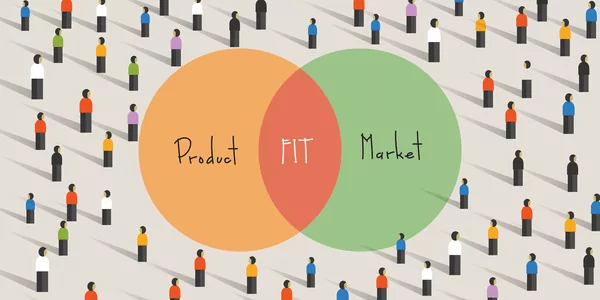
Product/Market Fit was defined in a 2007 blog post by Marc Andreessen, as “being in a good market with a product that can satisfy that market.”
In other words, finding product market fit (PMF) is a way to assess whether a product or service will be successful in a certain market. For example, if a business has PMF, their product or service answers a problem for a big consumer market. And that product will easily and quickly sell. Simply put, if there’s a demand, it will sell.
Why is product market fit important in 2025?
Identifying and measuring a Product/Market Fit is a foundation for marketing and brand innovation plans. The PMF shows if the product is viable, and puts a spotlight on consumers who are underserved by existing products.
Data helps to better understand what customers are missing in the current market, like new products and features customers would like to see.
Businesses that don’t have PMF with their products often suffer from low repeat sales, almost non-existent word of mouth, difficulties in attracting media attention, and more. Indeed, evaluating product market fit should be an important step in any go to market strategy.
The product market fit framework.
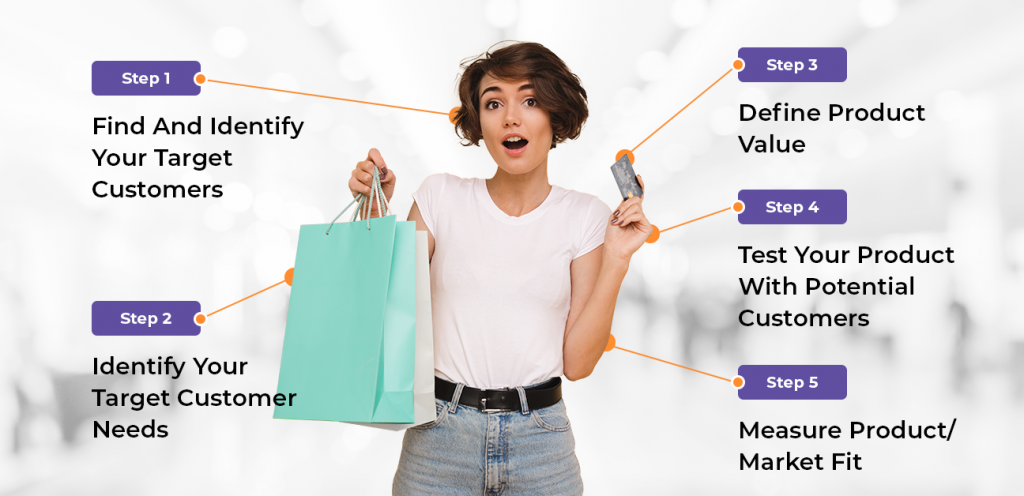
3 phases, 6 steps. All it takes to build your framework and know you have a product ready for the market.
Phase 1: Find the market
Before focusing on features, obsess over the customer and their problems. This is the “market” part of the equation; identifying current and potential consumer markets is the first step to assessing PMF.
Every great product is targeted at someone specific, with definitive needs. Step 1: Identify Your Target Customer
Get specific and define your Ideal Customer Profile (ICP).
Who are they? Think about demographics (age, location), psychographics (values, interests), and their job role or daily routine.
After finding the wider market, segment your potential customers into smaller groups based on shared characteristics (similar needs, interests, lifestyles or demographic profiles).
Identifying customer sub-groups can provide a better analysis, and help businesses gain a clearer understanding of their customers’ needs and desires.
Create personas. Build 1-3 detailed user personas. Give each a name and a story. This makes your target customer feel real and keeps your team focused on who they’re building for.
Step 2: Uncover their underserved need
Once you’ve assessed your target audience, find a problem that isn’t solved well. Which needs of theirs are not being met? This information is used in product and service design, in order to match a customer’s desires and eventually improve product/market fit.
Conduct customer interviews: Talk to at least 15-20 people in your target audience. Don’t pitch your idea; instead, ask open-ended questions about their challenges, goals, and frustrations. Listen for pain points they mention repeatedly.
Analyze competitors: Look at the 1 and 2-star reviews for competing products. What are customers complaining about? These complaints are a goldmine of opportunities.
Look for a “hair on fire” problem: The best problems to solve are urgent and important. Is this a minor annoyance for them or something they would gladly pay to fix? How would you imagine competitor products would score on customer effort today?
Phase 2: Design the Product
With a deep understanding of your customer and their problem, design a solution!
So, many of you may be thinking right about now – what do you mean, design a solution. I have a product! I want to know if my product that I’ve already imagined will have PMF.
Understood. At this point, after looking at your customer and understanding the need – ask yourself first what they really need. Is it the problem you imagined or something slightly – or even completely – different? This is a very hard thing to do. We love our ideas, often with good reason. But if we want our ideas to be great products, we need to step away from them just a bit and test them to see if they are coming at a time when they will be appreciated.
Step 3: Define Your Value Proposition
The value proposition is a clear, concise promise of the value you deliver. It should answer the question: “Why should a customer choose this product?”
Focus on the benefit, not the feature. For example, instead of “Our tool has a one-click export feature,” say “Our tool saves you an hour every week by exporting reports instantly.”
Define the exact benefits the product or service offers customers. An important approach is to identify a brand’s innovative aspects in comparison to current competition. Creating a product’s value proposition allows you to focus marketing strategies and often improves brand desirability.
Write it down: Craft a simple statement like: “We help [target customer] solve [problem] by [your unique solution].”
Step 4: Build a Minimum Viable Product (MVP)
An MVP (minimum viable product) is the most basic version of your product that can solve the core problem for your earliest customers. “Minimum” is key: It should have enough features to be functional and demonstrate your value proposition. Don’t spend months building the perfect product. At this point, your goal is to get it into the hands of real users as quickly as possible and learn from their experience.
Focus on one thing: Your MVP should do one job exceptionally well, rather than doing ten things poorly.
Phase 3: Find the Fit
Test your assumptions and see if your product resonates with the market.
Step 5: Measure
Showing real customers your product (or at least a prototype) allows you accurate feedback. Testing sessions provide a glimpse into customer experience; performing market research will give you valuable consumer insight. The information will allow improvements and modifications prior to product launch.
You need both qualitative and quantitative feedback to know if you’re on the right track.
Qualitative Feedback (The “Why”):
Talk to your users: Ask what they like, what they hate, and what they’d miss if it were gone. Their language will tell you if they “get” the value.
Quantitative Metrics (The “What”):
The next step is to measure and analyze the data.
There are three very popular ways to measure Product/Market Fit:
Customer Lifetime Value (LTV) – Customer lifetime value (LTV) shows how much profit can be made from an average customer during the product lifecycle. Lifetime value is affected by multiple factors, from customer service to a brand’s website interface. The figure is calculated based on estimated future earnings from a particular customer. The LTV helps identify market segments with the most growth potential, and can help a brand determine resource allocation.
Net Promoter Score (NPS) – The Net Promoter Score is an index ranging from -100 to 100, measuring the willingness of customers to recommend a company’s product or service to others. Answers are analyzed and used for calculating customer satisfaction and assessing business growth potential. A high NPS means that customers like the product and service and will most likely spread positive word-of-mouth.
The Sean Ellis Test: Survey users and ask: “How would you feel if you could no longer use this product?” If 40% or more answer “Very Disappointed,” you may have product-market fit.
Step 6: Iterate or Pivot
Product-market fit is a process, not a single event. Use the feedback from your measurements to decide on your next move.
Double Down: If your metrics are strong and users are happy, focus on improving the core features and scaling your marketing.
Iterate: If feedback is mixed, use it to refine your product. Tweak features, improve user experience, or clarify your messaging.
Pivot: If your core assumptions were wrong and the product isn’t resonating, don’t be afraid to make a significant change. This could mean targeting a different customer, solving a different problem, or completely changing your value proposition.
This cycle of building, measuring, and learning is the engine that will drive you toward product-market fit.
Validating product market fit through multi-source feedback
Relying on traditional metrics like Net Promoter Score (NPS) or Lifetime Value (LTV) alone can not give you the understanding you need. These numbers are the *what*—they tell you if you’re winning or losing, but they fail to explain *why*. A 10% churn rate signals a problem, but it can’t identify the specific defect, missing feature, or competitor action that’s causing it.
This is where multi-source feedback becomes essential. A modern, holistic view of product acceptance requires combining quantitative metrics (the “what”) with unstructured qualitative data (the “why”). By analyzing customer voices from every channel simultaneously—public product reviews, direct survey responses, social media comments, and support tickets—you can connect the dots.
For instance, your NPS score might drop 5 points. By analyzing multi-source feedback, you can immediately see this drop correlates with a spike in negative sentiment about a “confusing new update” or “slow shipping.” This holistic approach allows you to see the *full story* behind your KPIs, identify threats before they critically impact your metrics, and find hidden opportunities for delight that a simple NPS score would never reveal.
What is word-of-mouth marketing?
According to an article in the Harvard Business Review, how customers feel about a brand and what they tell others about it directly influences revenue. Word-of-mouth marketing (WOM marketing) is influencing and encouraging positive word of mouth about a brand.
Consumers increasingly rely on word-of-mouth marketing, especially with the advent of social media and social media influencers. Many people check online reviews and social media posts before purchasing a product or service.
The increasing influence of word of mouth marketing expresses perfectly the need for a product market fit framework: brands or products with product market fit will have no problem encouraging and sustaining positive WOM marketing.
The Modern Product-Market Fit Framework: From Intuition to Insight
The original concept of product-market fit was often validated through intuition, small-scale surveys, and slow, manual feedback loops. Today, that framework has evolved. The rise of AI, real-time customer analytics, and faster iteration cycles has transformed PMF from a static, one-time goal into a continuous, dynamic process.
In this modern framework, data-driven insights have replaced intuition as the primary tool for validating market demand. Instead of relying on a “gut feeling” after a few user interviews, product managers can now analyze millions of unstructured data points—from product reviews, social media, and support tickets—to get a statistically significant view of the market.
AI-powered analytics identify emerging trends, competitor weaknesses, and customer pain points at a scale and speed that was previously impossible. This allows for faster, more confident iteration. Teams can launch an MVP, instantly measure sentiment on specific features, and then prioritize the *next* development cycle based on what the data proves the market actually wants, not just what a small sample *said* they wanted.
Can Revuze help me achieve product market fit?
While methods for measuring product market fit mentioned above are effective, they are limited.
Both Customer Lifetime Value and Net Promoter Score provide a narrow view of customer satisfaction and experience with a brand. The Sean Ellis test is based on a small subset of your potential audience and thus limited in scope. And while it does provide some interesting insight, it is impossible to understand what the actual problem is with the product from the test. This means that you may know you don’t have PMF, but you don’t have the tools you need to do something about it. Basing Product/Market Fit on highly granular analysis can provide a much wider and more accurate view of the consumer market.
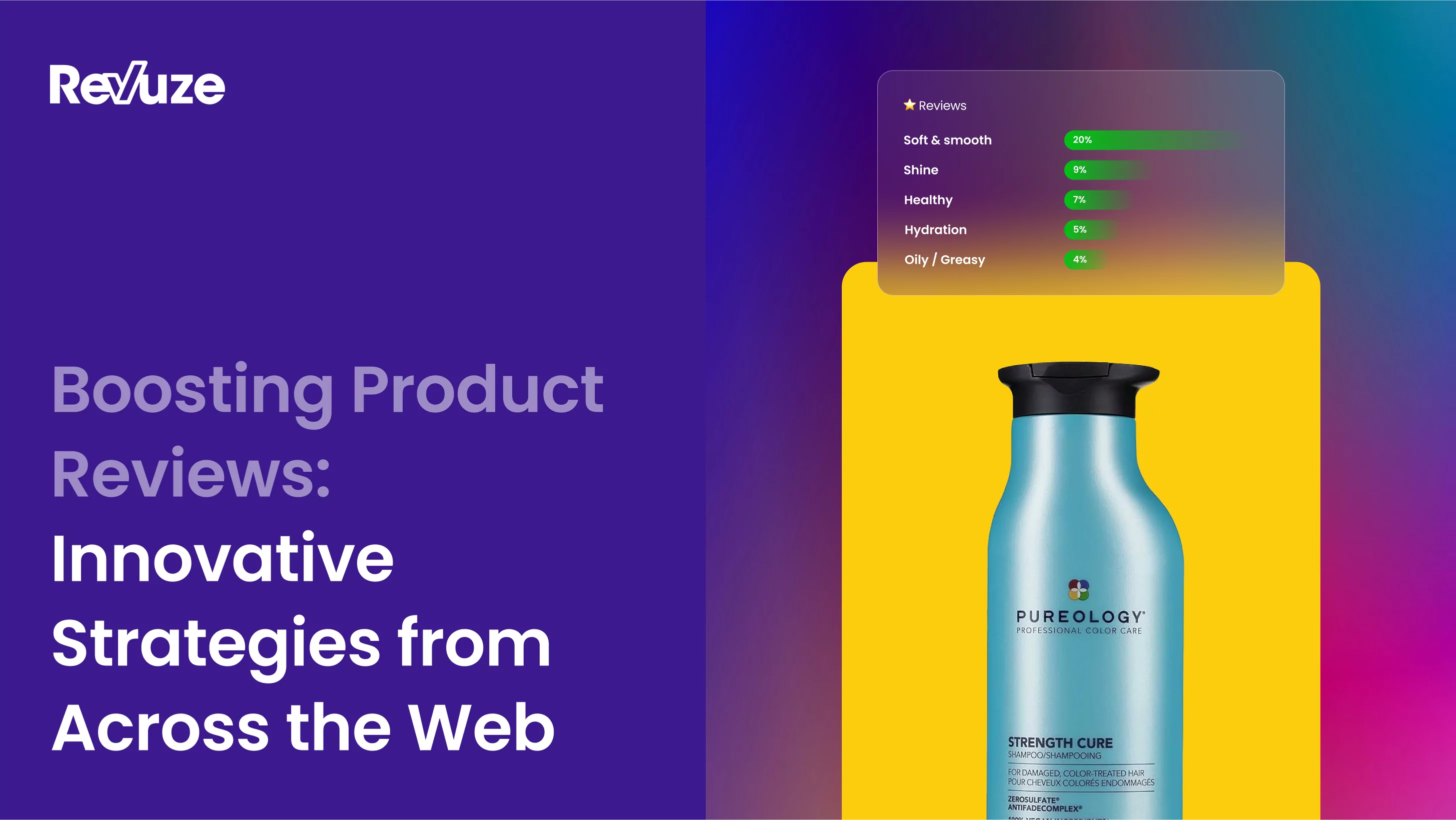
The Revuze AI powered platform provides each professional with access to the consumer data they need to excel at their work. Automatically parsing millions of social comments, reviews, blog posts, forum dialogues and more, the Revuze platform allows you to understand your customer like never before, with industry leading technology that ensures your insights are genuine, leading to better results.
Our customers have up to the minute information on the entire category with great detail on every SKU, every day, and are empowered with next-step actions, from insights they can trust.
The Revuze ActionHubs revolutionize how businesses leverage data to drive success in the digital landscape. As the only solution providing brand and category-level, verified buyer data, Revuze helps organizations transform online feedback across all sources into true, actionable insights for informed data-supported decisions so they can lead categories.
If you want access to this depth of information, check us out.
Frequently Asked Questions (FAQ)
How can startups measure product-market fit before launch? Before launch, you measure proxies for PMF. This includes strong interest in an MVP (Minimum Viable Product), high sign-up rates for a waitlist, successful pre-order campaigns, and positive feedback from qualitative user interviews. These indicators suggest you’ve found a real problem that customers are willing to pay to solve.
What are the most common signs that a business has lost product-market fit? Common signs include slowing growth, high customer churn, declining user engagement, and a rise in negative customer sentiment. You may also see an increase in sales-cycle length or a drop in conversion rates, indicating your solution no longer resonates as strongly with its target market.
How does customer churn impact product-market fit validation? High customer churn is a direct indicator of poor or lost product-market fit. It means the product isn’t delivering on its promise, solving the core problem effectively, or providing continuous value. True PMF is characterized by high retention, as customers find the product indispensable.
What tools or analytics platforms best support continuous PMF tracking? A mix of tools is best. Product analytics platforms like Mixpanel or Amplitude track user behavior and retention. Voice of Customer (VoC) platforms analyze unstructured feedback (reviews, surveys) for sentiment. Combining quantitative (behavioral) data with qualitative (sentiment) insights gives you a complete picture of PMF.
How can AI-driven sentiment analysis improve product-market fit insights? AI sentiment analysis moves beyond if you have PMF to why. It analyzes thousands of customer reviews and comments to pinpoint specific features, topics, or pain points driving satisfaction or churn. This helps you understand the “why” behind your metrics and prioritize the right optimizations to maintain fit.