 All
Articles
All
Articles Email
Analytics
Email
Analytics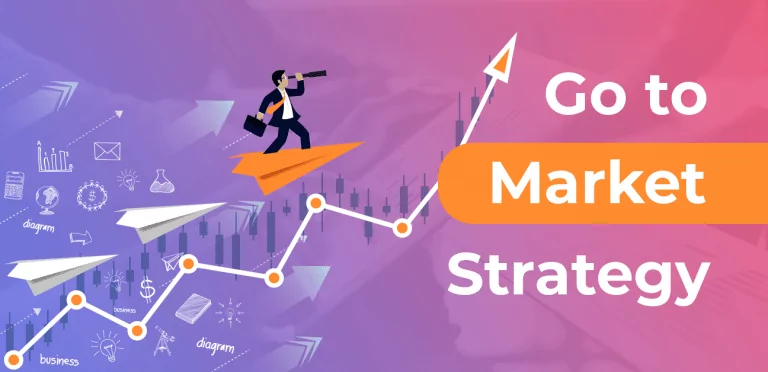

Emily Louise Spencer


When launching a new product or entering a new market, you would want to get the best possible results in terms of sales, brand awareness, ROI, or other KPIs.
However, you will likely lose more than you gain without a documented marketing plan. That’s why businesses rely on a go-to-market (also known as GTM) strategy to increase their odds of achieving their goals.
Creating this plan is relevant for all businesses – from SMBs and startups to the enterprise level. Moreover, refreshing the one you used for a previous launch is always a good idea as circumstances, and people change.
In this complete go-to-market guide, you’ll find everything you need to get you running, including:
- What is a go-to-market strategy is.
- Why it is important.
- The key components of an efficient go-to-market strategy.
- How to craft a successful one on your own. And,
- Examples from leading brands.
Let’s get started.
What is a go-to-market strategy?
A go-to-market strategy is a comprehensive plan that outlines how a new product would reach its end customers.
Generally, every go-to-market strategy outlines the value proposition, target audience, entire marketing plan, and sales strategy.
Sounds like your regular run-of-the-mill marketing plan, no? Well, there are a few key differences.
Go-to-market strategies vs. marketing strategies
If you’re in the early stages of launching your brand, your go-to-marketing, and marketing strategies might be fairly similar, but once you’re well established, they will diverge and become very different.
You can sum the differences up as follows:
| Go-To-Market Strategy | Marketing Strategy |
| short-term | long-term |
| driven by a specific product | business-wide |
| designed for product launch | covers all time periods |
Why are go-to-market strategies important?
Strategy is key to success in today’s markets. Creating a quality, data-driven, clear marketing strategy helps businesses to understand their aims and goals.
First, it clarifies the reasoning behind the launch of a product or service, identifies the target market, sets a pricing strategy, and outlines the ways to draw and engage customers to a brand.
Secondly, a go-to-market strategy provides some quality control.
The design of a go-to-market strategy forces a business to evaluate and consider all the issues customers might have with their product or service.
Identifying and mapping potential pitfalls helps brands to improve their customer experience – from product development to informing sales and support teams – creating positive sentiment and maintaining customer loyalty.
Let’s talk about what makes for a good go-to-market strategy and what difference it can make for your success.
What are the components of a go-to-market strategy?
go-to-market strategies have several layers, which we’ll discuss in more depth later. In general, a solid document will contain your:
- Objectives: What you plan to do and how to achieve your goals.
- Customer attraction strategy: How you plan to attract customers and convince them that you’re the best option for them.
- Sales strategy: Your sales model and how you intend to promote your product.
- Delivery strategy: How you plan to get your products to customers, whether via direct shipping, through a middleman, etc.
- Customer support strategy: How you plan to handle potential issues and support your customers when they have difficulties using your products.
While every product launch should focus on the “objective” part, the other aspect will be prioritized differently, based on conditions such as the market and the product itself.
For instance, launching an iterative piece of software will require you to focus efforts on customer support, and a new yogurt flavor may need a clearer sales strategy.
To understand how to slice your pie the best way, you’ll need to perform quality market research and dive into the data.
Here are some points to consider.
4 key points about data-driven go-to-market strategies
Like many other marketing solutions, when done right, the go-to-market strategy is very useful and improves a brand’s sales and earnings.
There are a few components for an efficient and effective go-to-market strategy. One main thing to consider when creating a marketing strategy is its market definition.
A good go-to-market strategy has to define the consumer market for a product or service, helping optimize short- and long-term marketing efforts.
Another important aspect is the focus. The marketing strategy needs to focus on the product or service and its benefits to customers in the current market. It should highlight what a brand can offer customers that competitors can’t.
Additionally, an efficient go-to-market strategy should be flexible. In an ever-changing market, innovation is key. A successful go-to-market strategy is pliable and can be modified to match brand innovation.
Solving customer pain points
A pain point is a problem current or potential customers are experiencing with a product.
Pain points can be present in many different parts of the customer experience:
- Financial: Customers spend a lot on the current product or service and want to reduce costs.
- Productivity: Customers waste too much time using the current product or service and want a more efficient solution.
- Support: Customers aren’t getting the support they need along the customer journey stages.
Moreover, many customer pain points combine issues from several categories.
To successfully deal with customers’ pain points and present your brand as a viable solution, you first need to identify the problems.
A quality go-to-market strategy relies on data collected to do just that.
Improving product marketing
Product marketing is the term for promoting and selling a product or service.
It entails deciding on product positioning and messaging, launching the product, and more. Successful data-driven product marketing relies on quality information.
And to get that information, you’ll need to perform market research.
This will provide you with information about potential customer markets, along with the needs and pains that affect them.
One way of performing market research is by listening to your customers.
Social media has become a platform for customer reviews, customer service, and product promotion.
Through this, social listening is a great way to assess what messaging will work best and learn what social sentiment a brand is creating.
The go-to-market strategy provides a sturdy base for more focused market research and voice of customer analysis.
Using a well-constructed strategy ensures the messaging is consistent and in tune with buyer personas and attitudes, helping sales teams to optimize marketing and get better sales and revenue.
Innovating your brand and product
As we said earlier, innovation is key in today’s highly competitive market. Businesses innovate using two main ways:
- The first is product innovation, meaning a new solution to a problem many consumers encounter. A brand can offer a product that addresses a formerly untouched issue or one that addresses the problem in a different way.
- The second is brand innovation, which is when a brand does something new. This can be launching a new product or making changes to an existing one.
Creating a go-to-market strategy is a great foundation for a successful innovation of any kind, especially when it’s data-driven.
Having a strategy helps focus innovation efforts around set goals.
Moreover, It maintains priorities and sharpens innovative ideas. This creates an improved innovation process that is more likely to aid brand growth and survival.
Crossing into new territories
Cross-border ecommerece shopping is taking the world by storm. It’s set to exceed $1.9 trillion In 2022, growing even further in 2023.
As consumers shift more and more to online shopping, businesses must prepare themselves and expand their ecommerce abilities to new territories.
But before opening up your wares to international shoppers, it’s imperative to prepare a strategy to penetrate these new markets.
A few essential steps to make before the expansion include product research, cross-border taxes, logistic costs, language barriers, and more.
Gathering data for a data-driven go-to-market strategy
Now that we reviewed the aspects and advantages of the go-to-market strategy, let’s talk about how you can get the data needed to create a data-driven one.
Performing customer-centric market research provides insight into customer desires, needs, and attitudes.
Revuze offers AI-powered Customer Experience (CX) analysis to help you better design marketing strategies.
Revuze developed the first self-training, low-touch AI technology that collects and analyzes data automatically and delivers consumer insights valuable for data-driven go-to-market strategy design.
How to build an excellent go-to-market strategy?
By now, you might be thinking, how exactly do I build a go-to-market strategy? I’ve read all of this information on what they’re about and what they do, but I have no clue how to build one.
Fear not. We’ve outlined nine simple steps to take you from novice to expert.
#1 Find your product-market-fit
Every product launch should be designed to solve a problem.
A great product looks at what consumers want, addressing their pain points and drawing customers to it.
There’s no use in providing a product that a competitor makes cheaper, sturdier, and easier to use.
It’s a concept known as product-market-fit, the ability of a product to satisfy a demand that the market creates.
If you manage to nail down your product-market-fit, you’re off to a great start.
#2 Define your target audience
Every product launch has a target audience. Those people who ideally will be the ones to buy your product. If you want to define them, you need to look at the following factors:
- What problems does your product solve?
- Who has these problems?
- How much are they willing to pay to solve said problem?
If your product only solves a minor problem, your price must reflect that. Customers aren’t usually willing to spend a lot to satisfy a minor issue.
#3 Research your competition and the current market state
Unless you’ve spotted a gap in the market that no one else provides, you can expect to see competitors already existing within your market space.
In order to get a leg up on them, you need to know them. Asking the following questions will help see the full picture:
- Who already provides a similar product?
- What demographics and geographic areas do your competitors consider their target audience?
- Are your competitors meeting the demand that customers create? Is the market oversaturated, undergoing scarcity, or somewhere in between?
- What do you provide that your competitors do not? Conversely, do your competitors’ products have any features that yours lack?
Competitive analysis, as it’s known, is key to understanding your position within the market, your strengths & weaknesses, and any opportunities & threats that might come your way.
#4 Decide on your key messages
Once you know who you’re targeting, you need to decide what messages you’ll convey to them.
Each demographic you target will require a personalized approach since they will react differently to the same message.
You should create what’s known as a value matrix. This is a summary of:
- Their pain points.
- How your product might solve said pain points.
- How do you plan to convey that to your customers?
Buyer personas will assist you greatly here, as well as simulations of customers with their problems, values, and goals.
You can use these to get an idea of what a particular demographic might want and how they might respond to you.
#5 Map out your customer journey
The customer journey is the sum total of interactions that a customer has with you, from first hearing about you and your products, all the way to the point of purchase.
The way to map out your customer journey is to identify:
- What touchpoints exist between you and your customers?
- How do you want to influence your customers at those touchpoints?
And from there,
- What type of interaction is needed to facilitate your ideal influence?
The best way to visualize your touchpoints is in the buyer’s funnel. This splits the customer journey into three sections:
- Top: Customers have a problem but are not yet in contact with you.
- Middle: Customers know you exist but aren’t sure if you are the best option out of the range of potential products.
- Bottom: Customers decide whether or not to purchase your products.
The touchpoints within each funnel section will roughly aim to grab the customers’ attention in the top phase, convince them what you offer is best for them in the middle phase, and convince them to commit to buying from you in the bottom phase.
With the combination of your aims at each step and your target demographics, you can work out exactly what you need to communicate to your customers and how you should do it.
#6 Choose your marketing channels
Marketing channels vary wildly, from TV commercials to internet adverts, newspaper prints to marketing emails.
Each demographic will have its preferred way of communicating, and it’s up to you to align with your customers’ preferences if you want to stay relevant.
Generally, you should choose your marketing channels based on how your demographics consume content. If you have multiple target demographics, choose multiple channels accordingly.
Further, we recommend using different marketing channels for each customer journey stage.
For instance, a YouTube ad might make customers aware of you and push them down the top of the funnel, whereas an email or presentation will help them pick you out from among dozens of other products within the middle.
#7 Choose your sales plan
Ultimately, a go-to-market strategy aims to generate sales and revenue. Thus, you need a sales plan.
There is a myriad of different sales strategies you can use, but some of the most common ones are:
-
- Self-service: Customers find you and purchase from you on their initiative.
- Inside sales: Your sales team forms a relationship with your customers and convinces them to buy from you.
- Field sales: Your sales team focuses on closing big deals, focusing on enterprises.
- Channel sales: You pass your product on to an external partner, who sells your product for you.
- Inbound sales: Sales processes are adjusted based on buyer actions.
- Outbound sales: Sales processes are adjusted based on seller actions.
- Cross-selling: You focus on selling your product in conjunction with others.
- Up-selling: Your sales team takes existing customers and encourages them to upgrade.
Each of these models has its strengths and weaknesses, and the decision to use is ultimately up to you. You should pick one that aligns well with your product and business model.
#8 Decide on your goals
Goals are factors such as sales figures in a specific amount of time, sales figure growth, amount of consumers contacted, etc.
They tell you whether or not your strategy is working and whether carrying on the way you currently are is the best way to continue.
Goals often fall under frameworks such as:
- Key Performance Indicators (KPIs).
- Objectives & Key Results (OKRs).
- Specific Measurable Achievable Realistic Time-Bound Goals (SMART Goals).
You can use one of the above to set your goals, a combination of two, or even all three!
#9 Lay out the steps that will help you achieve your goals
Now that you know what you want and how you can achieve it, it’s time to set out the steps to help you get there.
Creating a clear and well-crafted go-to-market strategy means working backward, seeing the obstacles that might appear in your path, and how to avoid them.
For instance, you might have a goal of selling 10,000 units of your product within a month.
However, an obstacle you foresee is that your sales teams might use different strategies, only some of which are effective.
The solution to this problem is to find the optimum sales strategy and communicate this to all teams.
Of course, these steps aren’t the be-all, end-all.
Once you have a go-to-market plan, you may need to adjust it based on new information.
This doesn’t mean that you’ve failed to create an effective strategy.
A go-to-market strategy, by its nature, treads into untested waters, so there are bound to be a few hiccups.
Keep your steps clear and flexible in case you need to re-evaluate your strategy. Share any updates you make with your teams, stakeholders, and management so that they know what’s going on and, most importantly, why it’s happening.
You should be all set by now, ready to draft a winning go-to-market strategy. But before you go and do that, let’s check out some winning examples from leading brands.
Winning go-to-market strategy examples

Smart Coach by Fitbit

Fitbit manufactures activity trackers. A few years ago, they launched a premium service and personal training app, which can be integrated with the user’s Fitbit.
Fitbit’s go-to-market strategy for the Smart Coach involved:
- Using paid and owned channels to reach the target audience.
- Understanding their target audience consisted of people who own Fitbit devices.
- Leveraging push notifications, social accounts, and emails to reach potential customers.
As a result, Fitbit earned around $192 million in revenue through its GTM strategy.
Key Takeaway: If you are releasing a new feature, inform your existing customers first.
Eight Sleep’s partnership with IFTTT
A smart mattress manufacturer, Eight Sleep, created a go-to-market strategy for a new feature of their existing product.
Eight Sleep partnered with IFTTT, a free service that lets you create conditional statements and integrate various apps. Together, they developed a new feature that allows its customers to simplify their night and morning routines.
Users can connect their mattress with their smart home system to:
- Turn lights on or off.
- Start their coffee machines.
- Lock the door.
- Activate bed warming.
Customers could perform all these activities from their smartphones and virtual assistant devices.
Eight Sleep’s go-to-market strategy for the new feature involved:
- Sending emails to the entire user base to help them realize the possibilities.
- Creating a dedicated landing page to inform and educate users about the new feature.
- Highlighting the benefits and use cases of their feature on Facebook and Instagram.
- Getting themselves included in the IFTTT guide and newsletter.
Key Takeaway: Apart from informing your existing customers, leverage social media marketing and get featured in major publications to broaden your reach.
Upscope leveraging live chat to target a new segment of customers
Upscope is a screen-sharing software. When it was founded, many screen-sharing software packages were already available in the market.

To make themselves stand out, they created a GTM strategy that consisted of:
- Creating ways to use live chat to target a new segment of customers (technical support, onboarding specialists, and customer success teams).
- Leveraging content marketing to drive traffic to their website.
- To get listed on their websites, partner with existing live chat companies such as LiveChat, Zendesk, Drift, and Intercom.
As a result, Upscope has acquired over 600 customers and is increasing.
Key Takeaway: Partner with other businesses with a complementary audience to yours. Use their existing reach to boost your brand awareness.
The new storytelling feature launched by VSCO during COVID-19
VSCO allows users to capture and edit visuals (photos and videos) and launched a new tool called “Montage.”
It is a multimedia creation tool that brings visual storytelling to life in a new dynamic way through a video.

Their go-to-market strategy involved addressing the current environment and our challenges as humans.
Their product announcement message was also crafted keeping in mind how their product helps us connect in the age of social distancing.
Their email copy reads, “as the world slows down, we know that these times can be difficult and uncertain. And in a small way, we hope our community connects you with others around the world.”
This is great because they first addressed the current situation and then how their product helps us solve this problem.
Key Takeaway: In times of crisis, aim to help your community. Explain how your product can help your customer in difficult times.
Nisolo launches new slippers to make Work From Home more comfortable
When most people around the world stay at home due to the fear of COVID-19, Nisolo launched a new slipper to make work from home more comfortable.
Nisolo ensured their marketing message doesn’t look promotional and showed how they care about their customers.

Nisolo’s email copy first focuses on the email subscribers’ emotional well-being and then announces its new slippers.
Key Takeaway: Create unique products that focus on helping your target audience rather than selling to them.
Huawei’s entry into the Indian market
Huawei is one of the most prominent telecom suppliers in the world. However, the telecom equipment market was overcrowded when Huawei was planning to enter the Indian market. Their biggest challenge was to make an impact to outdo their competitors (Apple and Samsung).
To increase its chances of succeeding in India, Huawei developed a go-to-market strategy that involved building local R&D centers to hire locals and show commitment to creating value for the country.
Further, Huawei partnered with a leading Indian English-language news channel to sponsor a contest. In the competition, Huawei smartphones were projected as aspirational products, contrary to the popular belief that Chinese products are low quality.
As of now, India is Huawei’s second-largest research base outside China. In the first three quarters of 2017, Huawei grew 60% in India’s enterprise business, higher than the global average (43%). Huawei India’s global production increased steadily until 2021 when the 2019 US sanctions against China caused the business to drop production.
Key Takeaway: When entering new markets, identify your biggest challenge and create strategies to solve them first.
TaxJar’s content marketing strategy to build trust
TaxJar offers tax solutions to businesses. When launching, the company looked at itself as a technology company first and a tax company second. Their primary aim was to make a better product than what was available in the market.
They also noticed that most of the content on the internet related to tax was either hard to find or difficult to understand.
TaxJar started publishing the best possible educational content to help its target audience understand everything about sales tax.
As a result, TaxJar built trust with its target audience and started getting customers.
When it comes to sales tax, more than 20,000 businesses and developers trust TaxJar.
Key Takeaway: Conduct market research to identify gaps in the current market and fill them to build trust with your audience.
Symyx’s plan to penetrate new market segments
In 2008, Symyx created a GTM strategy to ensure the successful launch of its ELN (Electronic Laboratory Notebook).
Symyx’s go-to-market strategy included:
- Print advertising to boost brand awareness and build confidence.
- Author or appear in 12 feature articles in target publications to emerge as a thought leader in the ELN market.
- Publish case studies to demonstrate the effectiveness of their product.
In the same year, Symyx generated $9.6 million in revenue.
Key Takeaway: Make the most of PR strategies and demonstrate what value your products can generate.
Slack’s product-led go-to-market strategy
Slack is one of the leading business communication platforms in the market.
Slack’s go-to-market strategy was to rely on product features and usage to increase customer acquisition, retention, and expansion.

They didn’t aim to sell software. Instead, it sought to sell a positive user experience.
In the memo shared by Stewart Butterfield to his team before they released the product, he said, “People buy “software” to address a need they already know they have or perform some specific task they need to perform.
However, if we are selling “a reduction in the cost of communication” or “zero effort knowledge management” or “making better decisions, faster” or “all your team communication, instantly searchable, available wherever you go” or “75% less email” or some other valuable result of adopting Slack, we will find many more buyers.”
Slack ensured that its product was better than any other business communication platform. They also ensured that their product was user-friendly and easy to use. Slack created a “customer development team” to better serve its customers.
As a result, Slack became the fastest-growing SaaS company of all time. Slack grew from $0 billion to $4 billion in valuation in four years and currently earns over $250 million a quarter as of 2022.
Key Takeaway: Make your product better than your competitors. Create an excellent customer support team to help your customers make the most of your product.
Go-to-market strategies in times of crisis
COVID-19 is somewhat behind us, but it taught us much as marketers.
Launching a product during a crisis is different than entering the market on regular days. You need to be very cautious with your sales strategies, marketing messages, and who to target.
Get yourself ready for the next turmoil by following these tips.
Optimize your messaging, targeting, and pricing
As a business owner or a marketer, it is your responsibility to ensure your messaging doesn’t hurt your target audience’s sentiments.
For example, during the COVID-19 times, using words like “get in touch” or “meet our team” wasn’t a good idea. Instead, we used phrases, such as “call our sales team,” or “let’s get on a video call to discuss business opportunities.”
Make sure to optimize the people you are targeting. If you were targeting small businesses before COVID-19, check if they are operating now or are adversely affected by the crisis.
At the same time, the world economy is taking a hit. Many people and businesses are struggling financially. If you can afford it, reduce your product’s pricing for a limited time.
For example, ABB has waived the fee for its numerous software services until the end of 2020 including ABB Ability Connected Services, RobotStudio, ABB Electrical Distribution Control System, and iUPSGuard software for hospitals.
Focus on making things easier for your customers
In any type of crisis, people are going to be stressed.
To help reduce the stress, look to eliminate any barriers to helpful information, offer additional access to support resources, and reach out to existing customers to understand their situation.
Campaign Monitor sent an email to all its subscribers that gave them an option to “pause the marketing emails for 30 days.” They also added a link to new content relevant to the times of COVID-19.
This is great because not everyone wants to receive promotional emails at this time. When a brand takes the initiative to make its customers’ life easier, it will be remembered for longer.
Help the community to earn a good name for your brand
Helping the community shows you are not just here to make money, and you care about the people around you.
Therefore, it is crucial to help your community in any way possible. It doesn’t matter how big or small your contribution is.
For example, to help first responders fight COVID-19, Under Armour delivered 20,000 face masks to Johns Hopkins Health System.
Under Armour also donated $1 million to Feeding America to support hunger relief efforts due to current school closures and quarantines.
Think beyond the immediate crisis
While optimizing your go-to-market strategy in times of crisis, it is crucial to think beyond the immediate crisis, as each presents lingering effects.
Most people may be done with face masks, but social distancing is still prevalent.
Brands with offline stores must consider ways to sell products and accept payments while prioritizing social distancing.
Companies that relied upon on-field sales agents to sell their products will have to think of new ways to get their products across, such as self-service or inside sales business models.
The best way to “think beyond the immediate crisis” is by building a team of creative people who can brainstorm and predict how the world might change.
Note: It isn’t only about your company or your industry but about how the world might change after the crisis. Think about how you can use it to create new business opportunities.
Wrap-up and takeaways
A go-to-market strategy helps you ensure your product launch succeeds and acquire customers in the tough competitive market.
It’s important to remember it’s ever-changing. A GTM strategy that proved true and successful last time won’t necessarily yield the same results.
You must keep up with the times and the people.
Data-driven market research will help keep an eye on what customers need and what pains them.
Only then you’ll be able to devise a successful and fresh strategy to launch your brand new product and service.
And what happens after? You’ll need to start getting feedback and analyzing it. But that’s a story for a different blog. Read it here.

 Agencies
Insights
Agencies
Insights